
Are You My First?
New reality tv show reminds us that we are still obsessed with virginity.

Between the heat waves and the steady decline of democracy my grasp on reality has been somewhat strained in recent days. I’ve started asking myself what is the difference between day-dreaming about my (secret) boyfriend* and straight up disassociating. I’ve spent much of the last month sequestered in my bedroom, door closed, AC on, ice packs strategically placed on my body. I work, I sleep, I let my mind wander to a world where I can afford to travel, meet beautiful artists, and re-locate my life to a place where I don’t feel compelled to google “authoritarian regimes and higher education” every other day. But is this escapism impeding my ability to deal with what is? How at the age of 51 am I still indulging adolescent habits of romanticizing the impossible, especially when we have so many machines (you know the kind that kill fascism) still to build? But then (secret) boyfriend smiles, tells me I’m brilliant, buys me McDonald’s without judgement and I am soothed.
All this to say, I’m feeling a bit unraveled.
At the suggestion of a friend, I watched a PBS documentary about Hannah Arendt, a German-Jewish philosopher who was able to articulate the rise of fascism in 1930s Germany and later in mid-century United States. I hoped it would prepare or inspire me to be bold going into a new semester of teaching about religious and racial discrimination. I marveled at her fierce intellect and perseverance. I wondered, how does one become and maintain that voice? How does one cultivate the habits of thinking and writing while fending off the mental and physical assaults of state-sponsored tyranny?
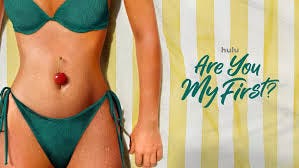
By then it was after 9pm which is when I stop expecting anything from my brain, so I decided to take a break from pondering the collapse of higher education. I clicked my Roku remote to Hulu which was advertising its latest reality dating show: Are You My First? I’ve never had a lot of interest in these shows, yet their ubiquity means it’s easy to catch the vibe: tittering contestants dressed in their best beach glam as they exchange shy glances across the rims of their frothy drinks. All in a stunning tropical locale. Usually scenes like this send me to my well-rehearsed internal monologue on the failures of heterosexuality and I click back to PBS.
But years of studying evangelical purity culture has made me a heat-seeking missile for all things extolling and exploiting people who claim the title of virgin. And that is the unique hook of Are You My First? All the contestants are (or claim to be) virgins. I started the first episode immediately.
Virginity has dropped from the spotlight in recent years after having over a decade of pop culture attention with projects like The Forty-Year-Old Virgin and Jane the Virgin. I watched and dissected both carefully at the time trying to discern how Hollywood is shaping our cultural understanding of virginity and virgins. And though I’m late to his story, Colton Underwood, who became known as the “Virgin Bachelor” on the reality show The Bachelor, rounds out this decade of the pop-culture virgin. Underwood is a whole dissertation’s worth of material on toxic masculinity. He grew up Roman Catholic, had a stalled football career, was a contestant on the Bachelorette followed up his turn as The Bachelor in 2019. He defied the fixed narrative of the franchise by rejecting both final contestants and brazenly declared his love for Cassie Randolph whom he had already rejected from the show. After their subsequent real-life relationship which lasted a year and a half, Cassie filed a restraining order against him. Colton had created a fake persona and used it to stalk her. He faced no repercussions for doing so. Colton Underwood is a good example of how men are able escape accountability and “fail up,” especially if they are willing to role-play their own drama for an audience. In 2021 he came out on national television, not because he met someone he loved so much he couldn’t keep it under wraps, but because he was being black-mailed by someone who knew he was gay. This was parlayed into a Netflix series which features Colton narrating his sexual journey, including coming out to his conservative, religious father on camera. Most recently, Colton is the co-host of a new dating reality show: Are You the First?
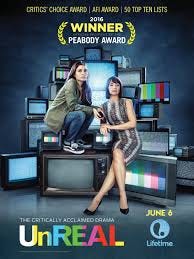
Fortunately, his participation in the show is minimal so we can ignore him and get into more interesting analysis of the virgin scramble for true love. Aside from the insipid and insulting narration by the two co-hosts, I understand why people love these kind of shows. They are social experiments controlled by production master-minds who are desperate to make good television. It’s a cultural phenomena that blurs the lines between social/emotional growth and media exploitation, just enough to have us discussing the tension between the two. If you too find this dynamic fascinating, I highly recommend the Peabody award-winning series UnReal with Constance Zimmer as the snarky producer to sharpen your analytical skills.
During the first three episodes of Are you My First? I found myself establishing a set of questions about the goals and strategies of the gamification of dating, hooking up, and declaring love. Unfortunately, these shows always follow a strict heteronormative formula that reduces the contestants to “guys” and “girls” who exhibit very flat representations of human desire and vulnerability. There are so many missed opportunities to engage the questions we all want answers to. For example, what even is virginity? In the first episode we learn from one contestant who defines it as penis-in-vagina sex. Another contestant mentions the breaking of a hymen (a word she stumbles to pronounce correctly.) In episode two the guys are quizzed on female sexuality and fail miserably. But for the most part, the contestants are not talking about being sexually active because winning the game isn’t about “losing your virginity,” it’s about making a meaningful love connection. At this point in the series, it appears everyone is interested in love, not just in hooking up and turning in their V-card. One of the most interesting parts of the show is how the contestants talk to one another about being a virgin, talk that presumes each of them have ideals about a love-match. A couple are anxious to be sexually active, but they are still not willing to simply do the deed without a meaningful connection. The prize isn’t sex. It’s love.

Virginity is a construct derived from patriarchal cultures that place numerical and cultural value on a woman’s body before she has had sexual intercourse for the purposes of reproduction. Originally, a woman’s virginity was important for the sake of paternal inheritance, so a father would know who his wealth would be passed onto. In the U.S. today this cultural practice is almost non-existent as inheritance laws are no longer controlled by blood lineage and the gap between men’s and women’s wealth has decreased (somewhat.) But this is mostly relevant only to the already wealthy. More significantly, virginity has always been a way to pathologize women’s sexuality, through commodification (such as dowries), physical exploitation (such as medieval virginity testing), and as a measure of a woman’s physical and moral purity. The last of these is the subject of my first book, Virgin Nation: Sexual Purity and American Adolescence in which I detail how women’s sexual purity became a bellwether for U.S. national strength and security. I’ll let you dig in more on your own, but suffice it to say, my research has little to offer the contestants of Are You The First? in their search to find love.
But I remain interested in representations of virginity because it is a significant cultural artifact used to distinguish different stages of sexual development that can be examined for insight into the mystery and mayhem of human intimacy. It’s important to note that these categories of virgin/non-virgin are developed within the sex/gender binary and therefore cannot escape the limitations of heteronormative, cis-gendered sexuality. Imagine this show for queer people who can’t depend on a normie definition of penetrative sex drawn from the basics of human reproduction? Imagine the expanded depth and breadth of *that* conversation.
In a documentary about evangelical purity culture called Give Me Sex Jesus (watch here on Vimeo) Melissa and Amanda describe the work it took to navigate the idea of virginity outside of the parameters of heterosexual norms when they fell in love. “What does it mean that we’re not going to have sex with a guy?” they had both wondered. They had learned growing up in their religious communities that they would be made physically and spiritually complete once they had sex with the man they made a lifelong commitment to. So choosing to be together meant letting go of a set of milestones they had relied on to chart the course of their relational, sexual, and spiritual growth. Melissa explained, “To validate what we share as equal to that has been really hard.” In regard to their sexuality, they had to decide together what constituted sex and the “loss of virginity,” since they had only ever learned the heteronormative, P-in-V model. The process they described was gentle, slow, and guided by a commitment to consent. The concept of virginity was not a helpful guide for Amanda and Melissa. But really, is it for anyone?
In episode one of Are You My First? Rachel, a 30-year-old cocktail waitress and romantasy author from Tampa, Florida discloses that her reason for remaining a virgin is due to a medical condition. She’s had enough sexual experience to know she has vaginismus and is determined to explain what this means to each of the men she considers on the show. Vaginismus is a condition which makes vaginal penetration extremely painful and often impossible. Though there isn’t enough research to determine its causes, vaginismus is both a physical and psychological condition possibly stemming from sexual assault or other forms for abuse. It’s a topic that regularly arises during conversation about evangelical purity culture, as some women who suffer from it point to fear-based teachings about sex for their inability to participate in and enjoy penetrative sex. In my own interviews with people who have grown up and out of purity culture, one woman described a decade of painful, marital sex, an experience she never questioned because she was taught that she as a woman would never experience sexual pleasure. And yet, she was obligated to satisfy her husband’s desire for sex. Because of this she found that her first experience of giving was relatively easy. It was also the first time she experienced an orgasm.
Virginity is a concept mired in fictions about innocence, experience, prowess, and power. I have no grand hopes that Are You My First? will offer us the depth of analysis we need in order to contend with the narratives of shame and desire that characterize human sexuality. But I will keep watching because de-mythologizing virginity is of vital importance for understanding why and how sexuality informs our impulses to both embody and disembody ourselves in relationship to one another. And if there is anything more we can glean from ten episodes of reality television show to help us understand our own assumptions and hang-ups about sex, The After Purity Project will be here doing what sapiosexuals do best. Over-think, over-analyze, and pine for a world where being intellectually engaged is as sexy as (secret) boyfriend’s eyes in this photo.
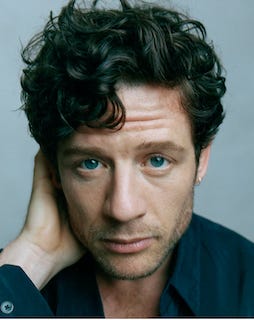
*The secret boyfriend/girlfriend/person is my own invention. It’s the person who embodies all your dreams and desires when you cannot manifest them yourself. They are often temporary, but highly effective for escaping the exhaustion of societal collapse. They work best when it is someone you do not know and will never meet. If they are a public figure, it is best not to learn any actual facts about who they are. You need them to be a blank slate able to carry all that you cannot. Finding out they got a DUI after the Vanity Fair Oscar party kills the fantasy. Your secret person can come in any variety: hetero, queer, pan, trans. My preference is sapiosexual, for the over-thinking woman who needs an abundance of intellect in order to be attracted and feel attractive.
Further Reading/Viewing:
How To Lose Your Virginity, Trixie Films (2013) https://trixiefilms.com/virginity
Hanne Blank, Virgin: The Untouched History, Bloomsbury Books, 2007. https://www.nytimes.com/2007/03/25/books/review/Kuczynski2.t.html
Laura M. Carpenter, Virginity Lost: An Intimate Portrait of First Sexual Experiences, New York University Press, 2005. https://nyupress.org/9780814716533/virginity-lost/
I’m a vaginismus writer from Tampa and so many people texted me about this show! Excellent read. Thank you for sharing.